

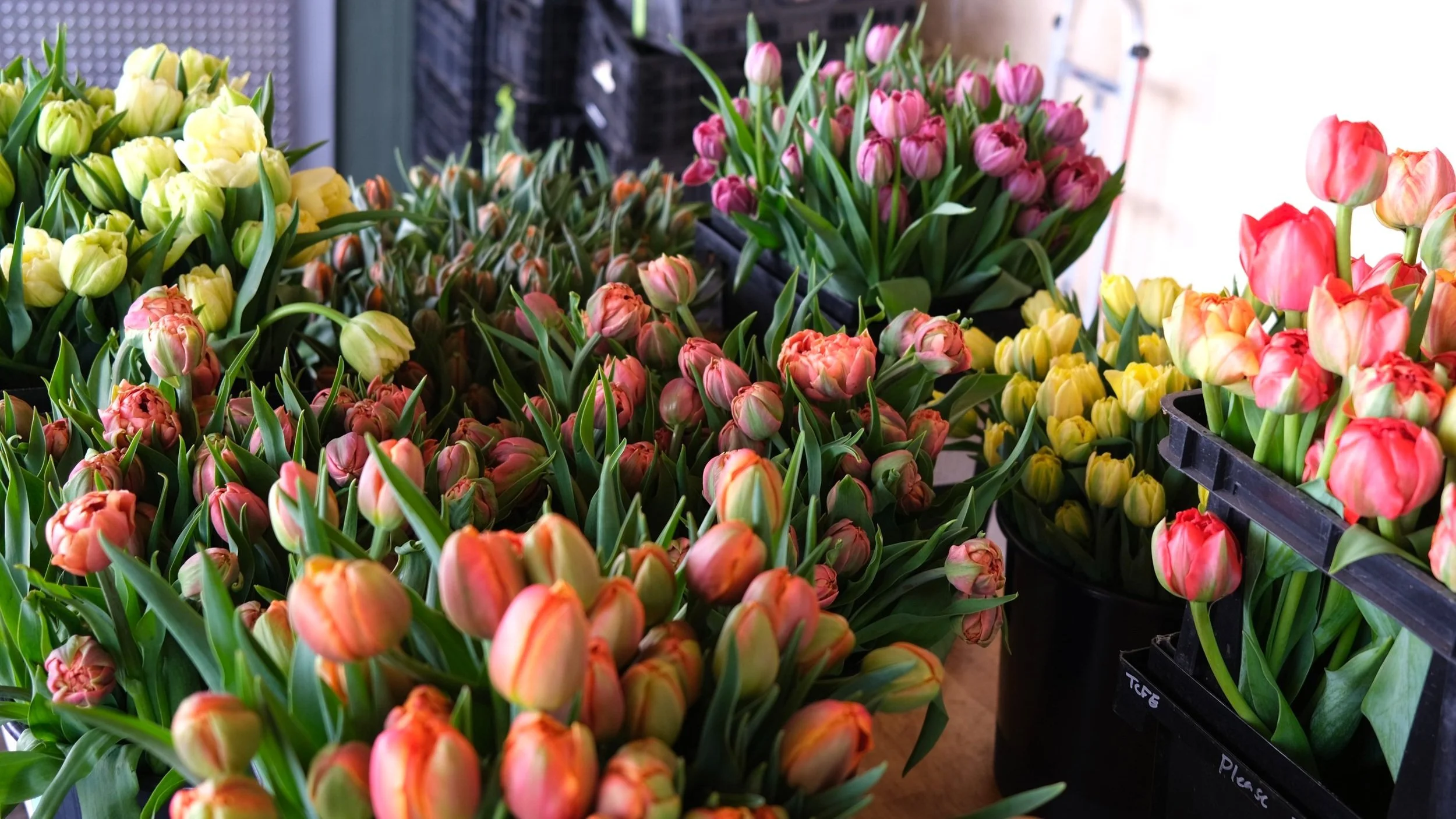
Here’s a peek into how we grow 18,000 tulips on a city lot in Minneapolis
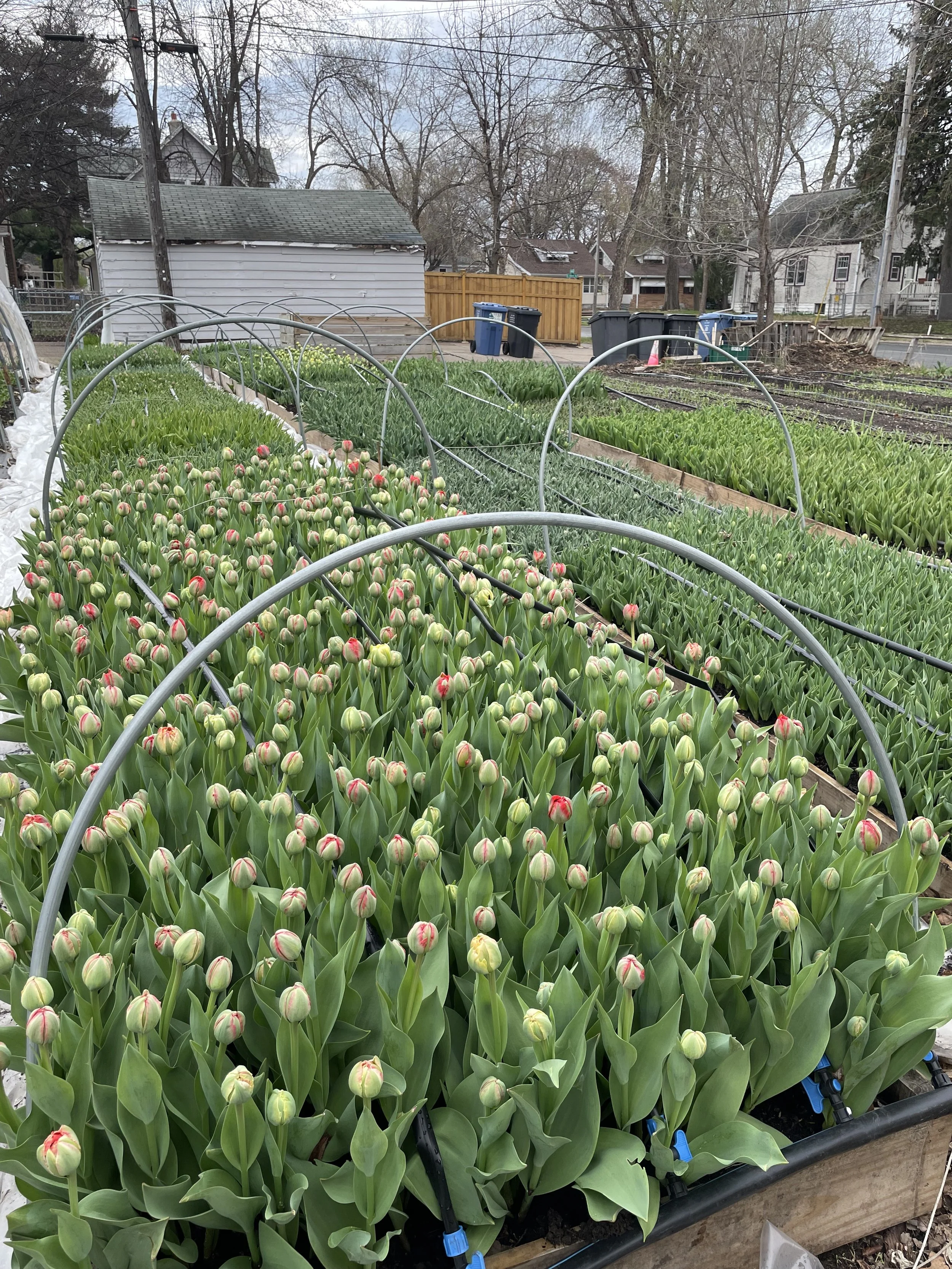
Tulips are a classic flower most people can identify. A common garden perennial bulb. And maybe for that reason, the way we grow them in the cut flower trade tends to astound people— we grow them as annuals! and we don’t save the bulbs! (believe me, I wish we could) In Minnesota, tulips bloom right around Mother’s Day, so it’s an important crop for us to have in abundance for the holiday.
planting
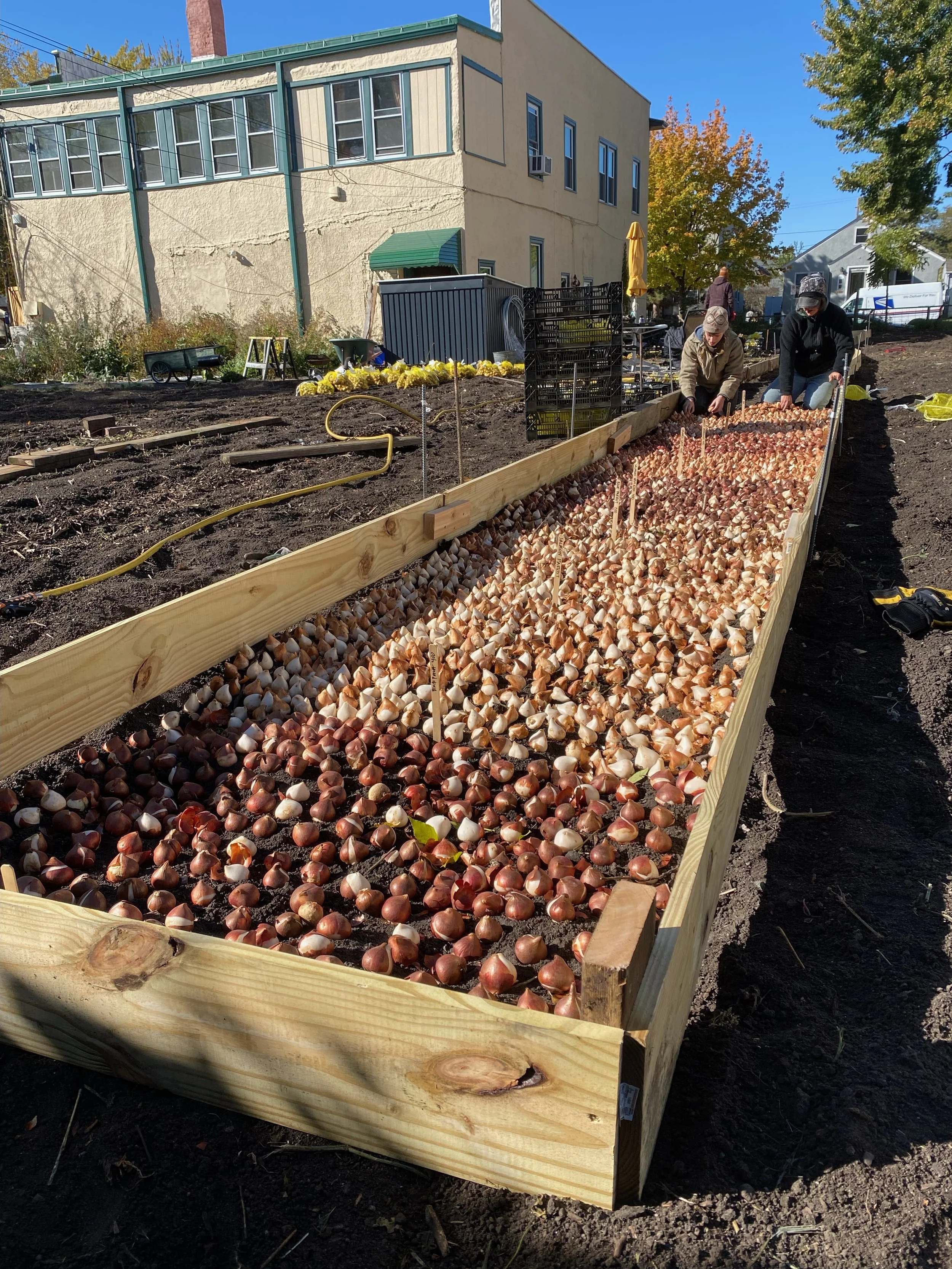
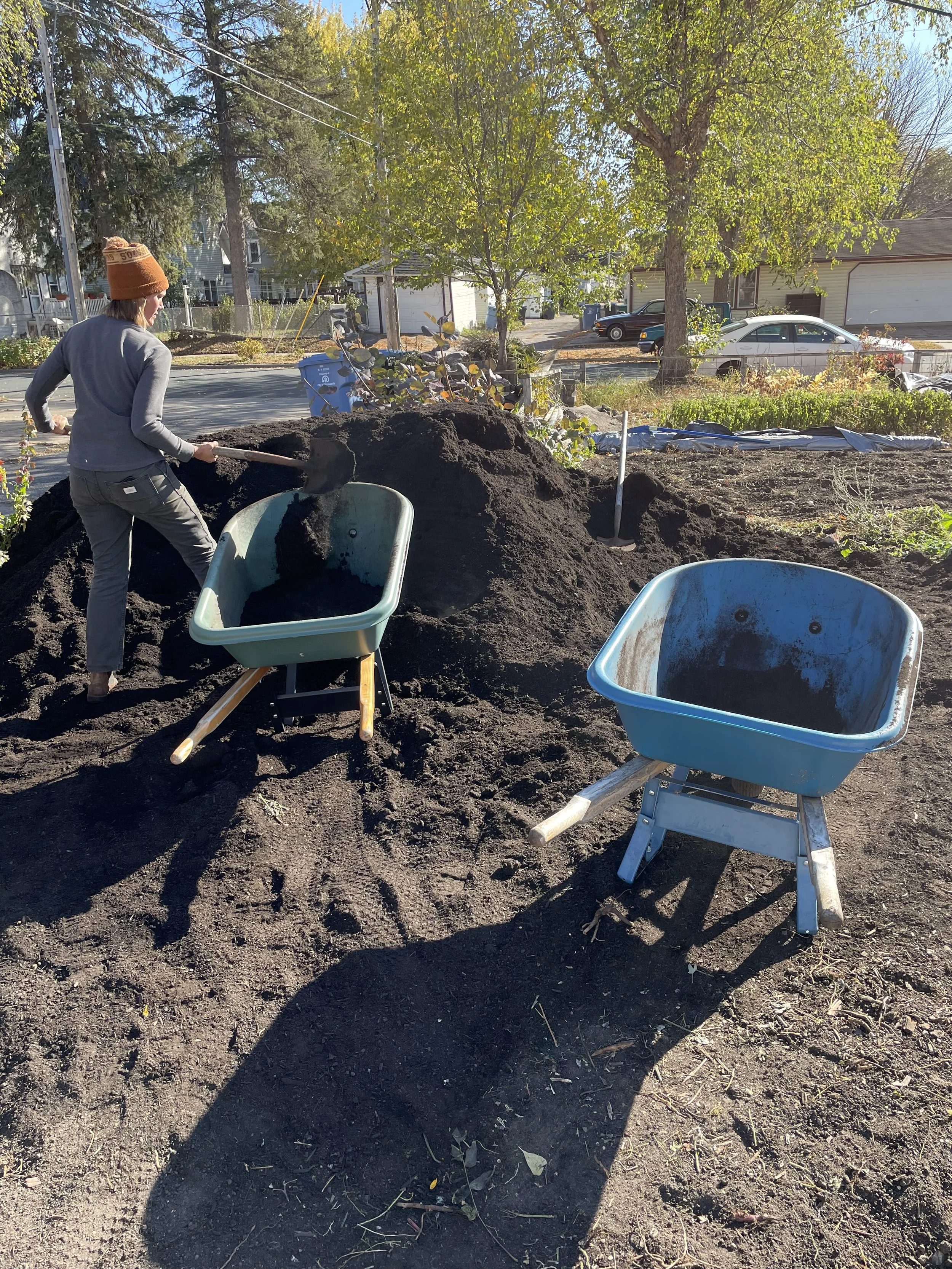
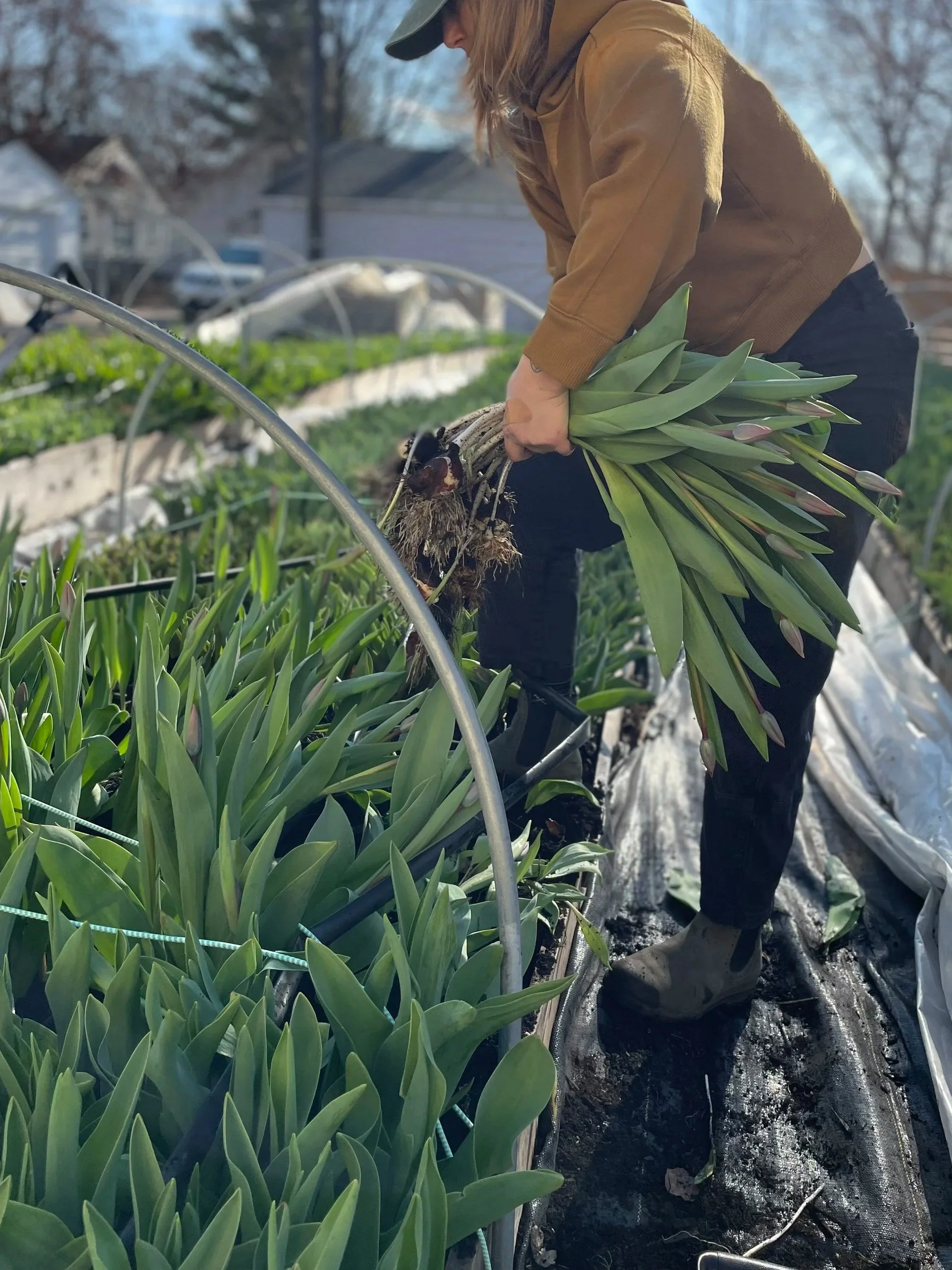
We plant in raised beds, because it’s more efficient for us to only shovel the soil once, as opposed to digging a trench and shoveling the soil back on top. The bulbs are planted extremely close together, like eggs in a carton. In 3, 4’x 50’ beds, we planted 18,000 tulips. We bring in compost to cover the tulips, and then we use that compost again to amend our beds after the tulip crop is done. I also like this raised bed method because the height deters some of the rabbit pressure in the city. However, I’m getting a little wary after hearing from farming peers who lost their whole tulip crop due to the compost being too hot. It’s a risk to bring in a lot of organic material into your growing system in the off chance it hasn’t broken down fully or could have residual herbicide. We haven’t had an issue with that yet, but it’s a huge investment to lose, so it’s worth considering!
Harvesting & Storing
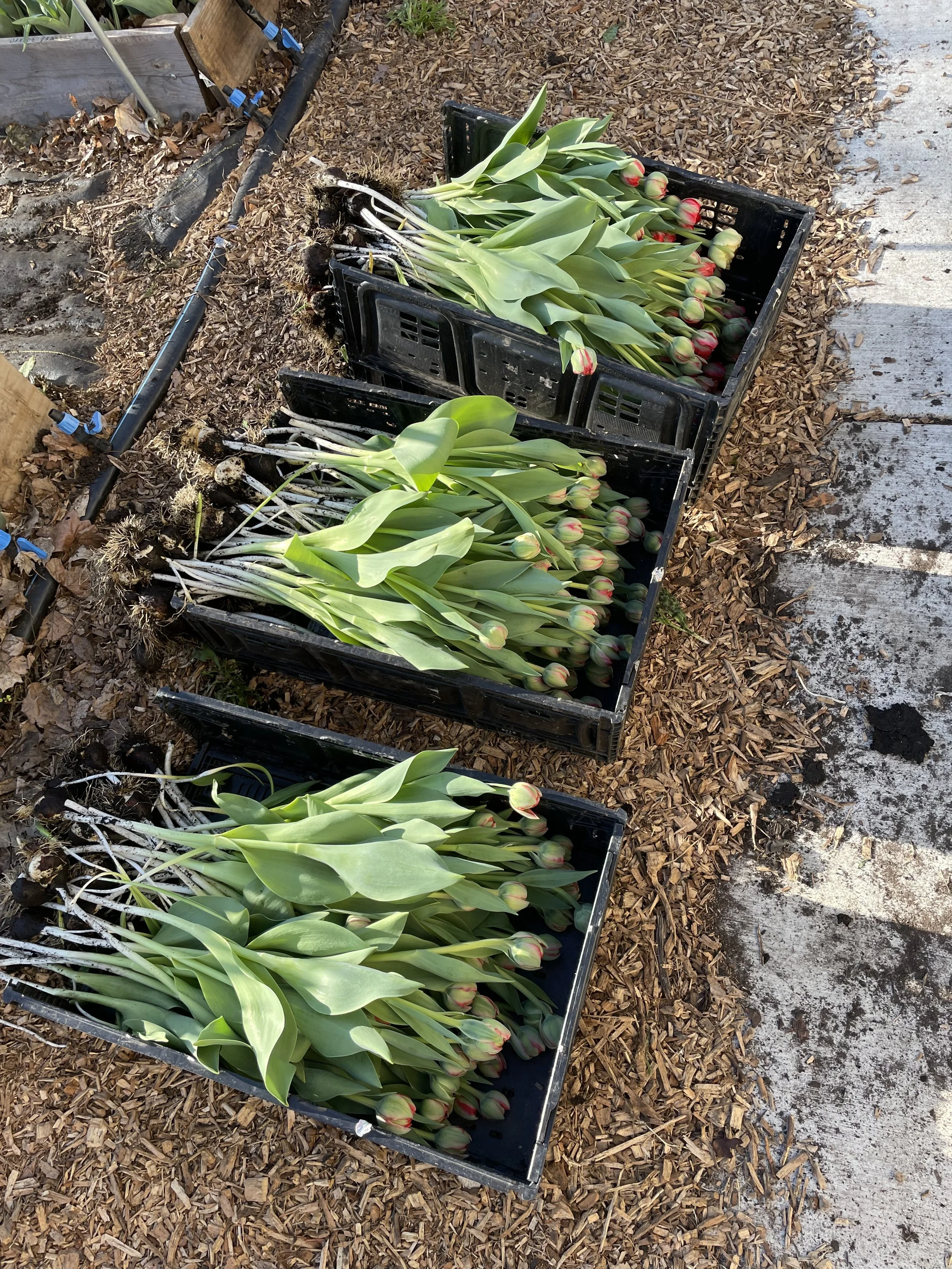
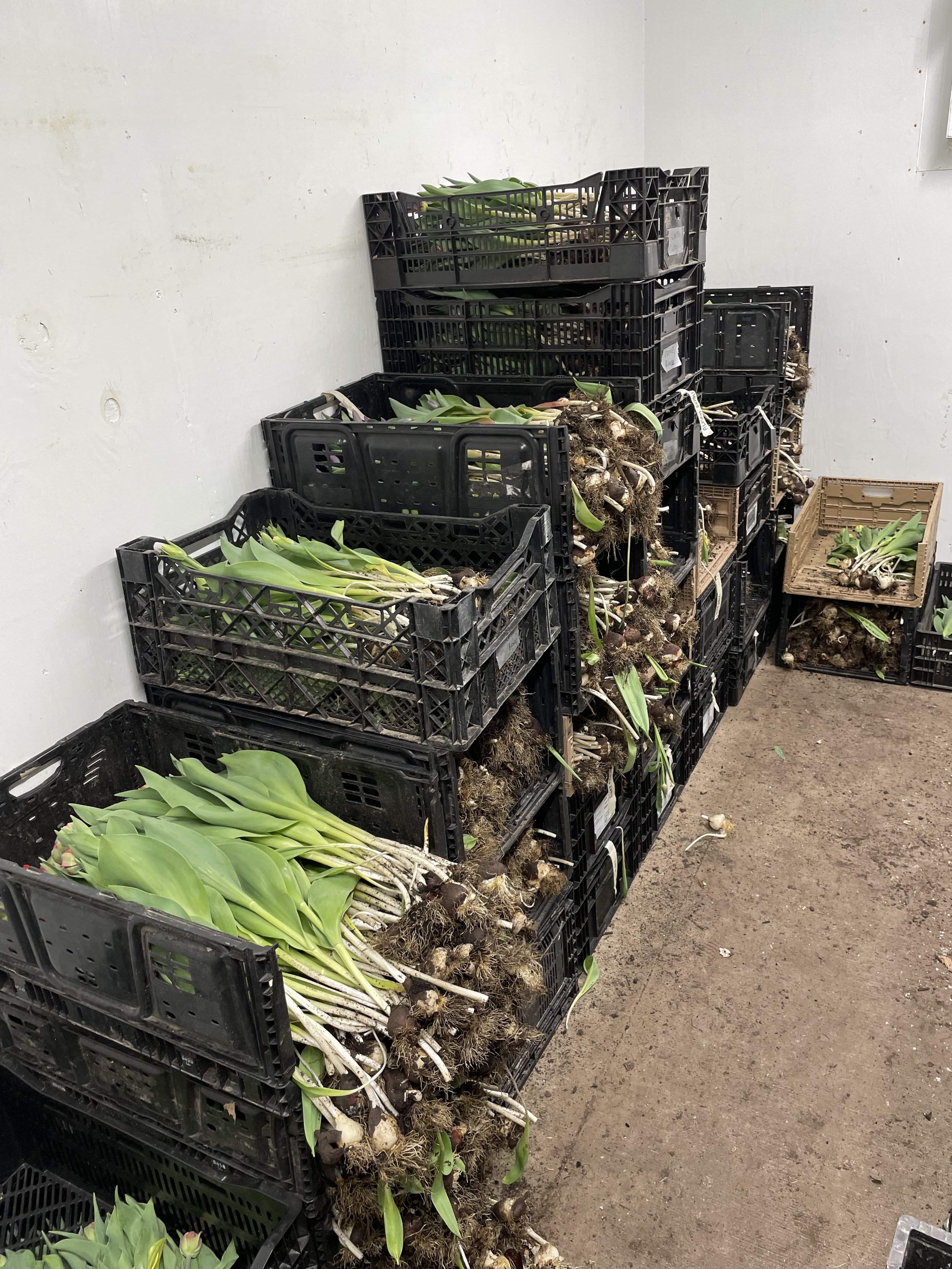
We always plant our tulips on our city plot (rather than our leased land in Hudson) because tulips need to be harvested multiple times a day in order to catch them at the perfect stage for a long vase life. We harvest tulips with the bulb attached by pulling up on the tulip and lifting it out of the ground. If you harvest too early, the blooms don’t open, but if you harvest too late, they don’t store well in the cooler and have a short vase life. Harvesting when the bud is colored up just slightly, but not open is the goal. Which is why you will never see a colorful display of tulips on our plot. We are harvesting out of the field before they fully color up! While the harvest window is a matter of hours, you can store tulips in a cold cooler (32-38 degrees) for up to 3 weeks (some venture even longer!). This is a huge benefit to the crop, giving flexibility for florist wedding orders and taking the pressure off the need to sell them within the week they are harvested, like most other flowers we grow.
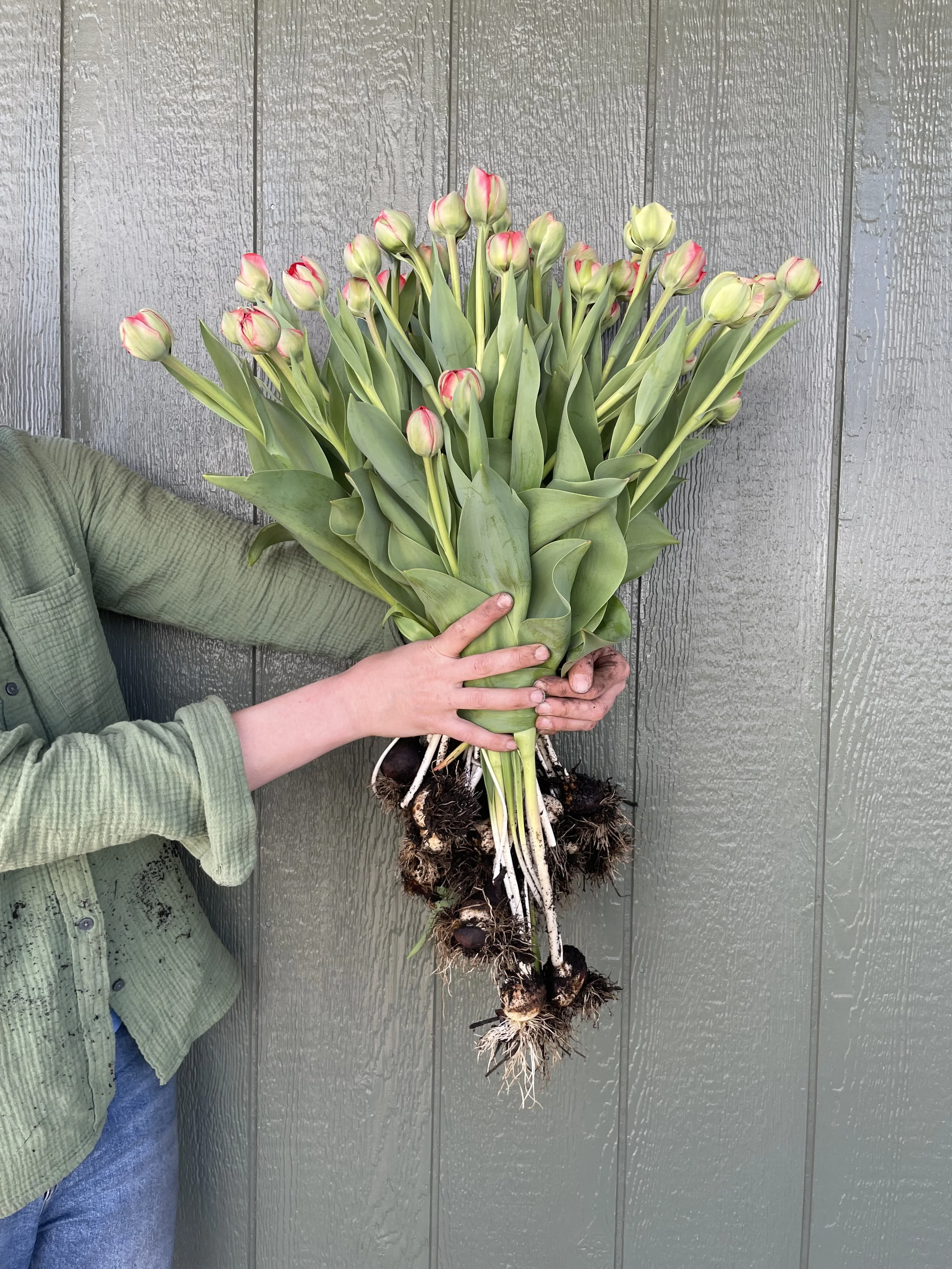
Ideal harvest stage
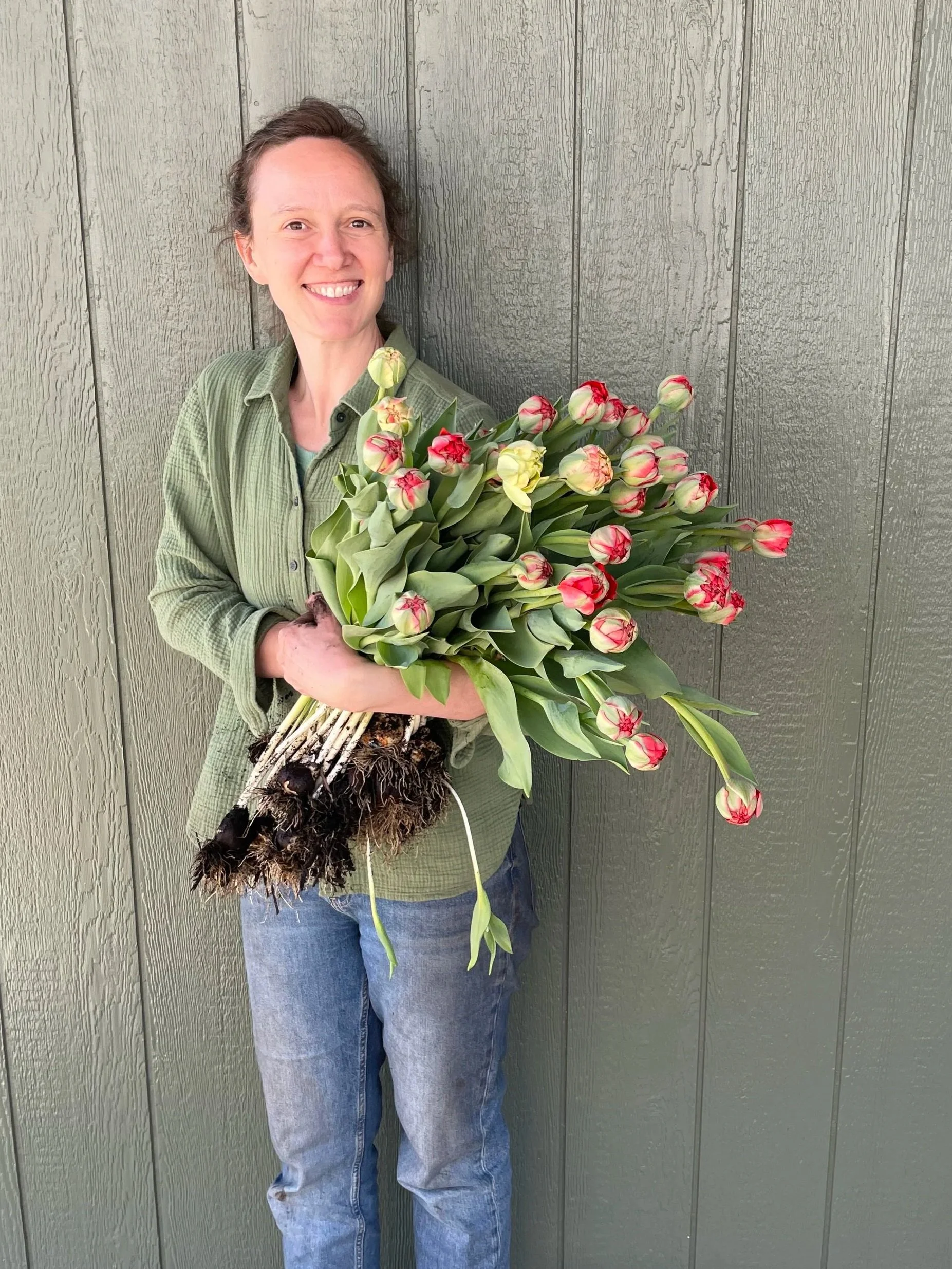
‘Before’ these are ‘Gudoschnick Double’ tulips. My very favorite variety.
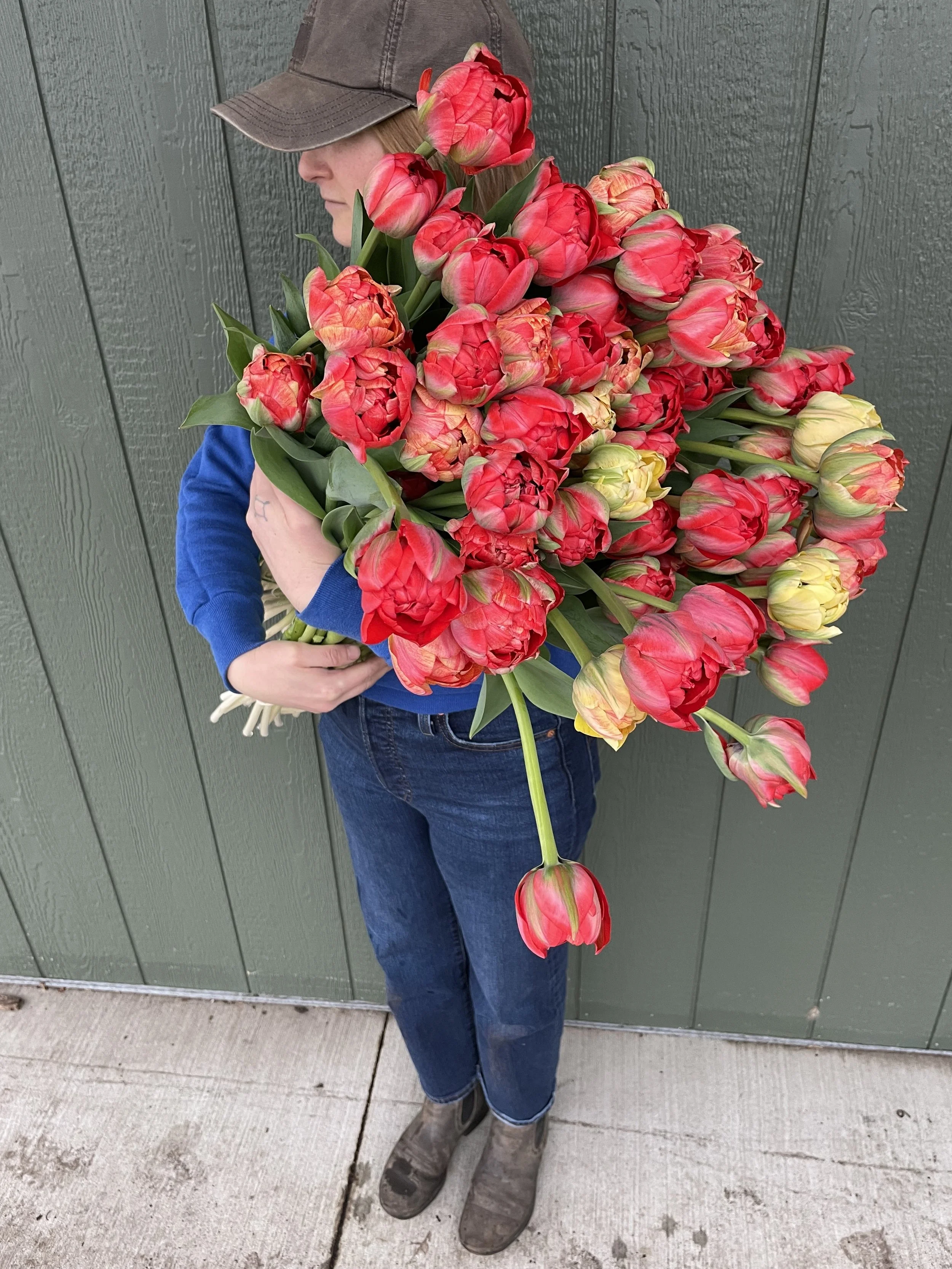
‘After’- see why they are my favorite?
postharvest
When we are ready to make bouquets, we cut the bulbs off, wash the remaining dirt off the stems and put the tulips in buckets of water overnight to hydrate. The flowers begin to open up— they are so impressive to watch as they open in a vase! The bulbs go into the compost bin–this is the part that really astounds people. Flower farmers grow tulips as an annual to get the biggest flower with the longest stem possible. We take the entire energy source by cutting off the full stem with leaves, so the bulb has nothing to replenish itself with. Our compost pile in the spring has piles of tulip bulbs in it, and neighborhood people are always walking by and ‘saving them’. If you are one of those people, don’t feel bad, even with my repeated warnings that they won’t produce flowers, my mom is also one of those people. She packs up the bulbs to bring home and says, ‘oh, it’ll just be a fun experiment!’ and then sends my dad out to the garden to plant them :). It’s a fruitless chore for his retirement, but he’s a good sport. So if you take from our compost pile, and go to the work of planting them, you just might be lucky enough to get some green leaves for rabbits to chew on next year ;).