

Overwintering Flowers
Between ranunculus, perennials and overwintering annuals, our June offerings have become really spectacular and abundant. A far cry from when I initially started growing cut flowers and there was a big gap between our tulips at the end of April to our first annuals in early July. I wanted to share a little bit more about overwintered flowers, because if I had to choose one true love in flower growing, this is it.
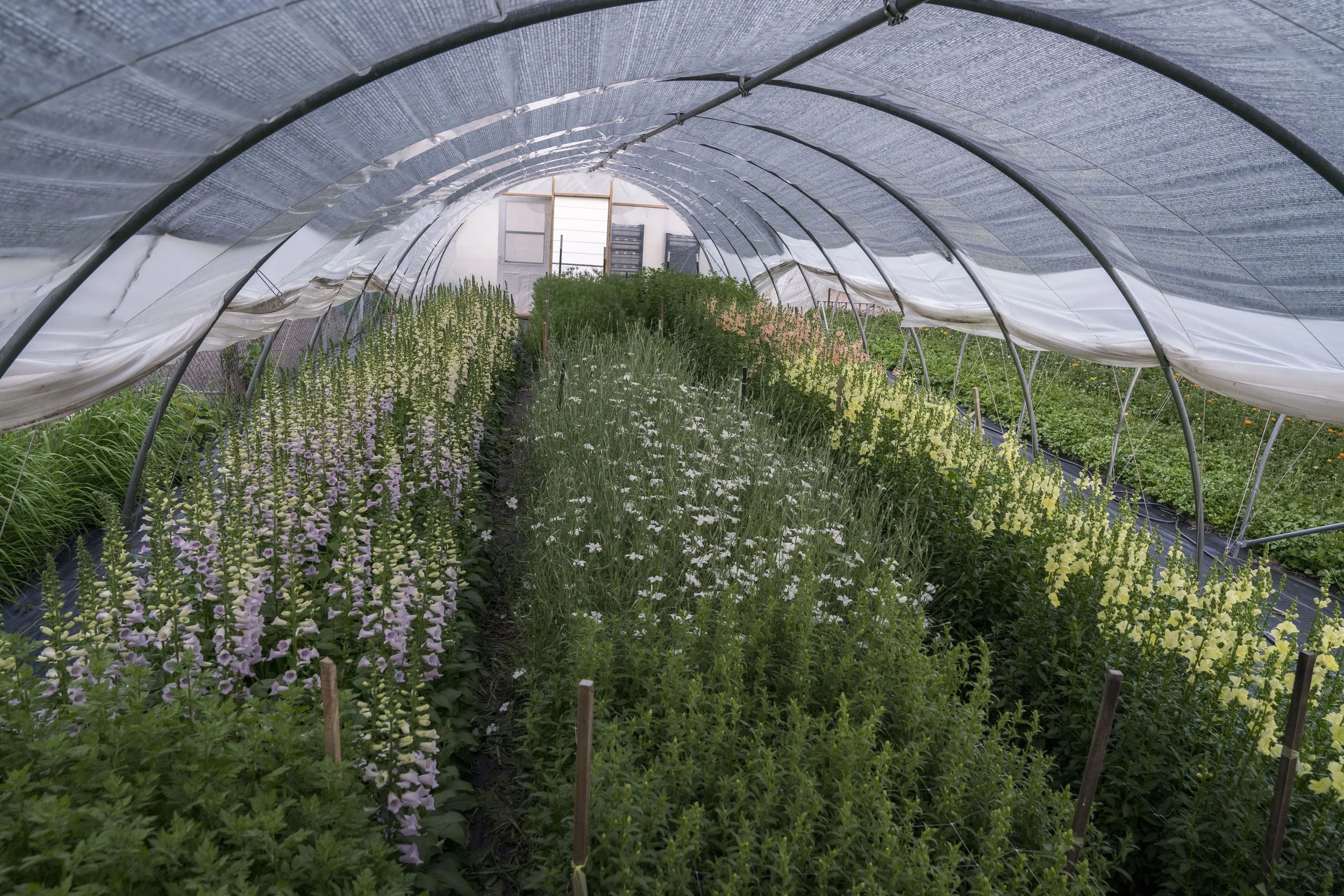
Overwintering is the process of planting flowers in the fall and caring for them over the winter with the goal of seeing blooms earlier in the season.
This technique has opened up a whole month of flower availability we didn’t have before. We can have an unheated tunnel bursting with blooms at the end of May into June. We started experimenting with this method in the fall of 2022 thanks to research done by Johnny’s Seeds. It’s proven to be absolutely game-changing for our farm. I’m fascinated by the process and experimentation of it all. The plants are tall and productive, and I get a lot of satisfaction checking on a small collection of plants in the depths of winter.
Our growing zone is 4b, so planting annual flowers at the end of October is not something people normally do. We see temperatures of -30 degrees fahrenheit throughout the winter, and will go weeks at a time without the temperature rising above freezing. So planting tiny green plants out in October feels WEIRD! But we gave it a try and the result was astounding.
All winter we keep the plants tucked under thick row cover (remay or frost cloth are other names) inside an unheated plastic tunnel. No propane or heating is used for this method. The plants send down roots over the winter, and as soon as the light starts lengthening after the Persephone period mid-february, the plants take off with green growth.
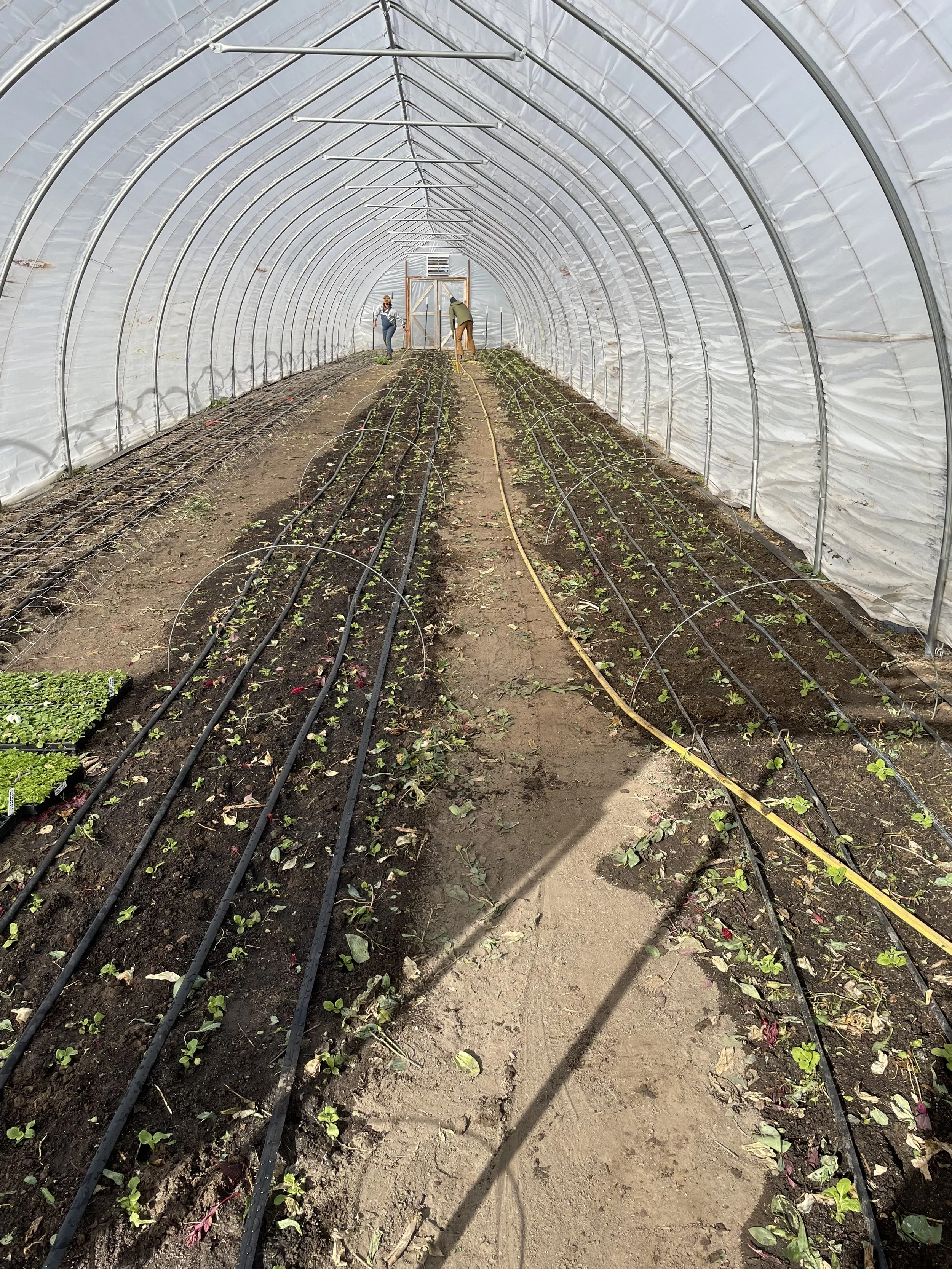
Planting end of October

Tucked in all winter
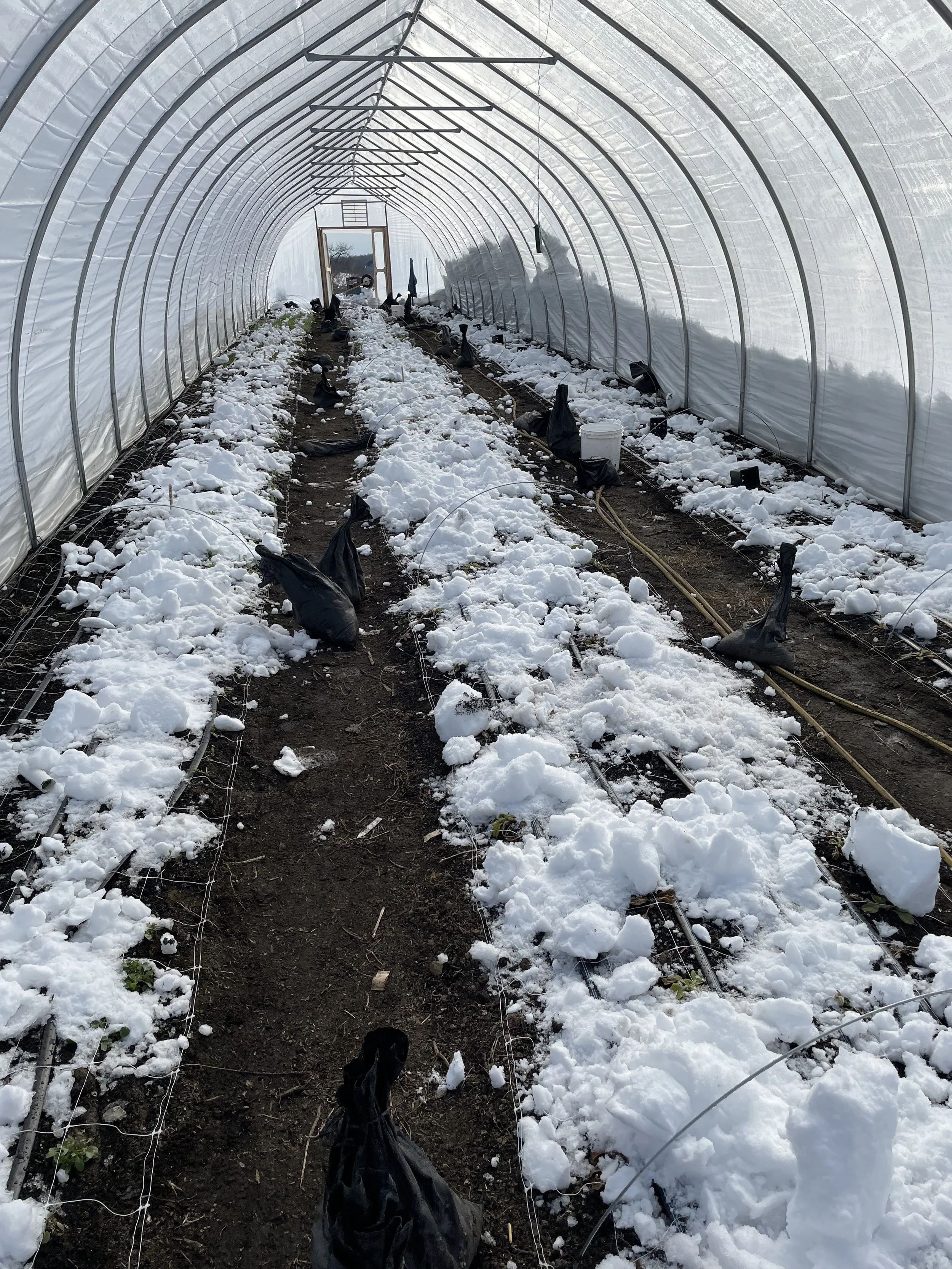
Watering with snow in February when we can’t drive out to the field
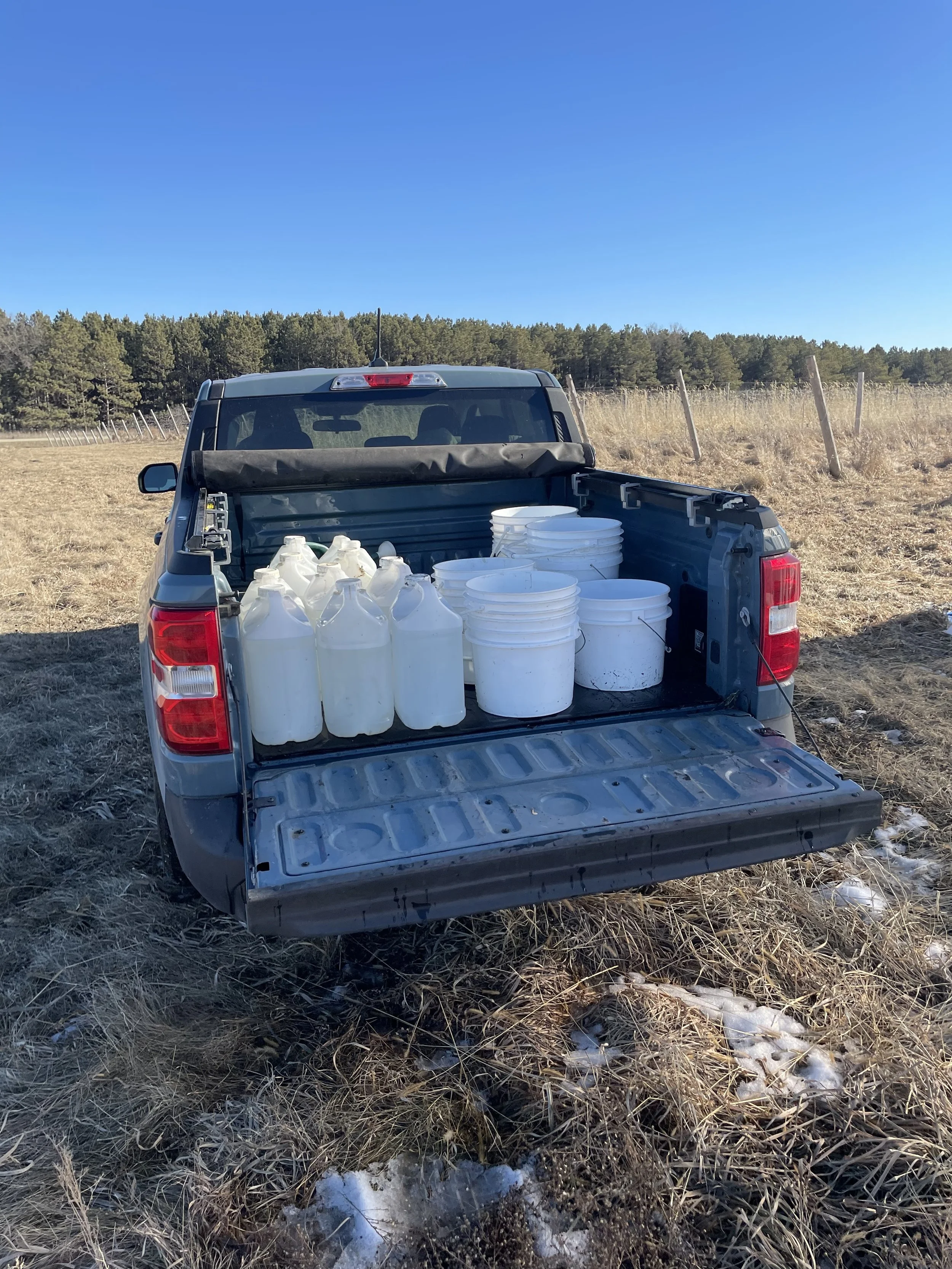
Hauling water when the hoses are frozen
Overwintered tunnel end of May
It’s not totally fool-proof, and every year there is some loss. There are common issues like rodent damage, disease from airflow issues and cold damage. We can’t water until the hoses defrost, so we haul water a few times and have even shoveled snow on the beds for moisture. And since the soil is so cold, the plants aren’t able to get all their nutrient needs, so we supplement by foliar feeding nutrients through a backpack sprayer.
These are the flowers we’ve had great success with, making for a gorgeous month of June:
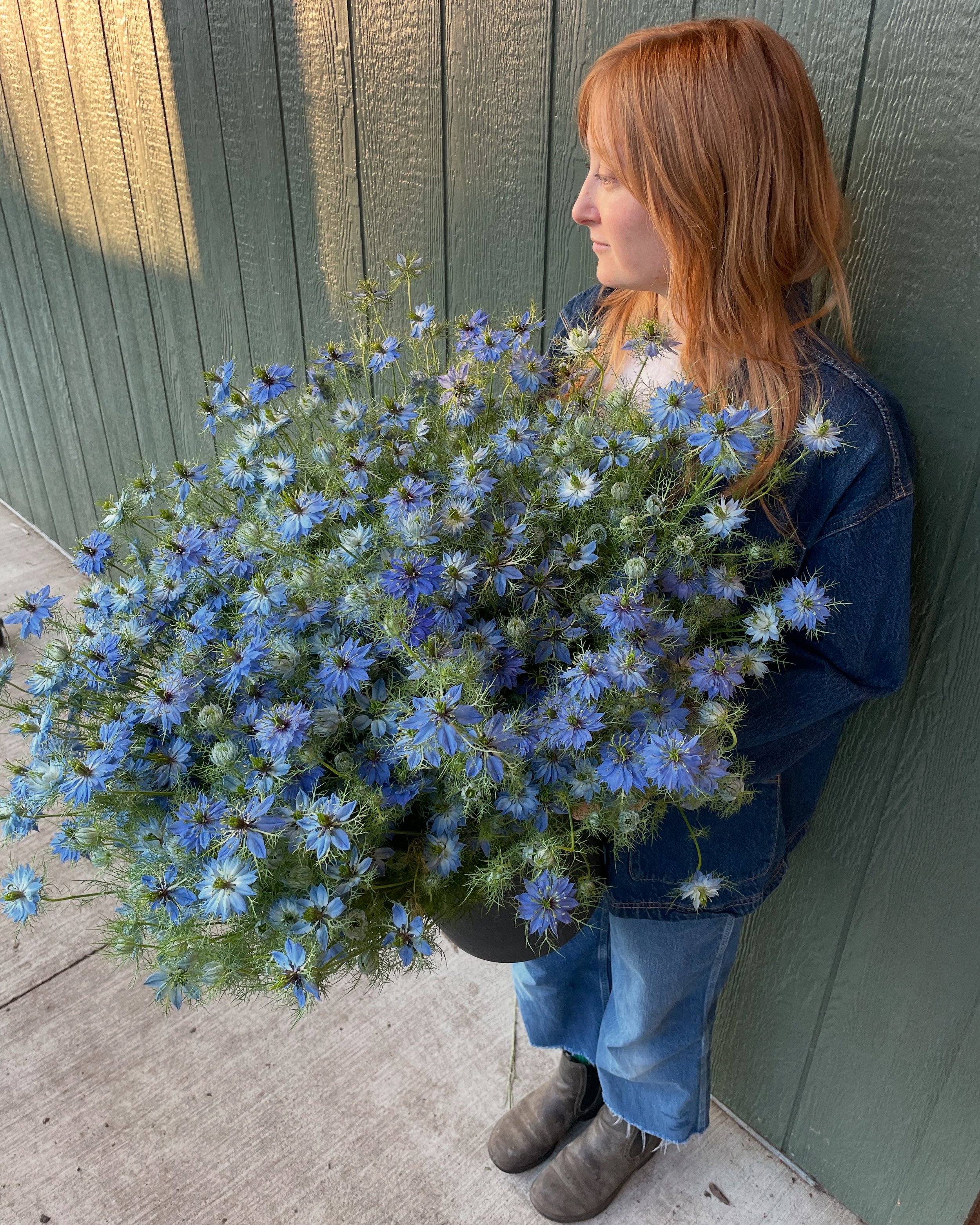
Nigella
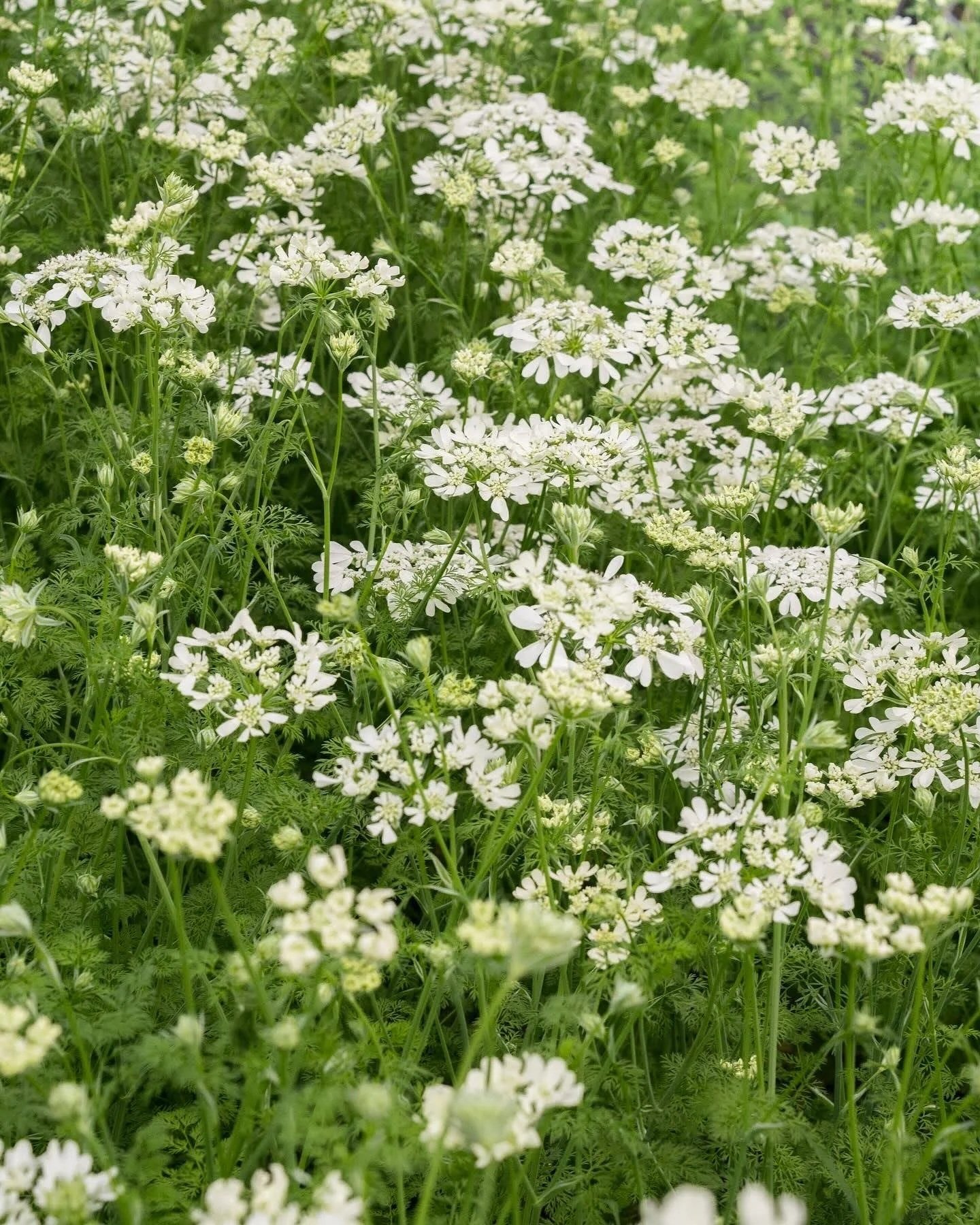
Orlaya
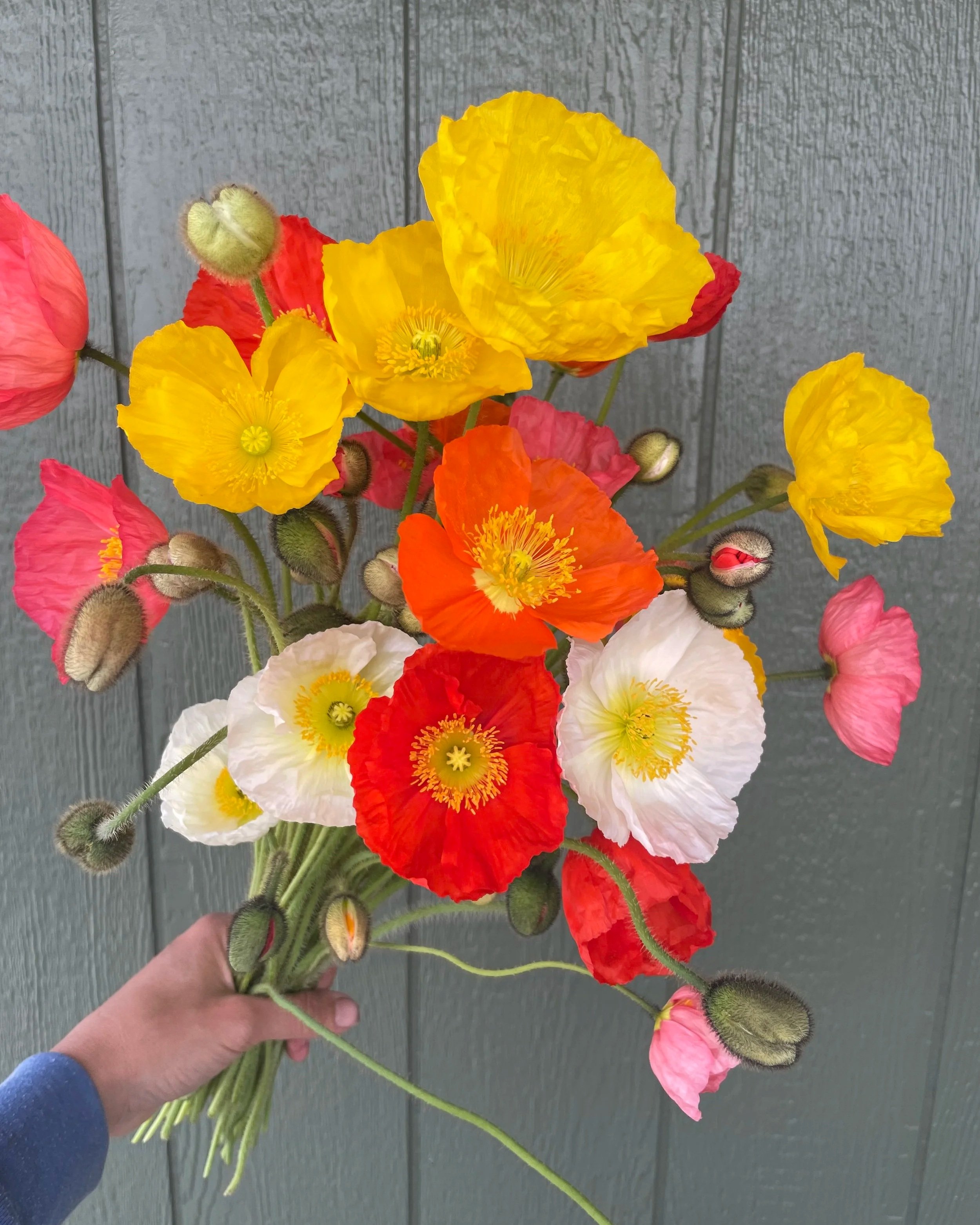
Poppies
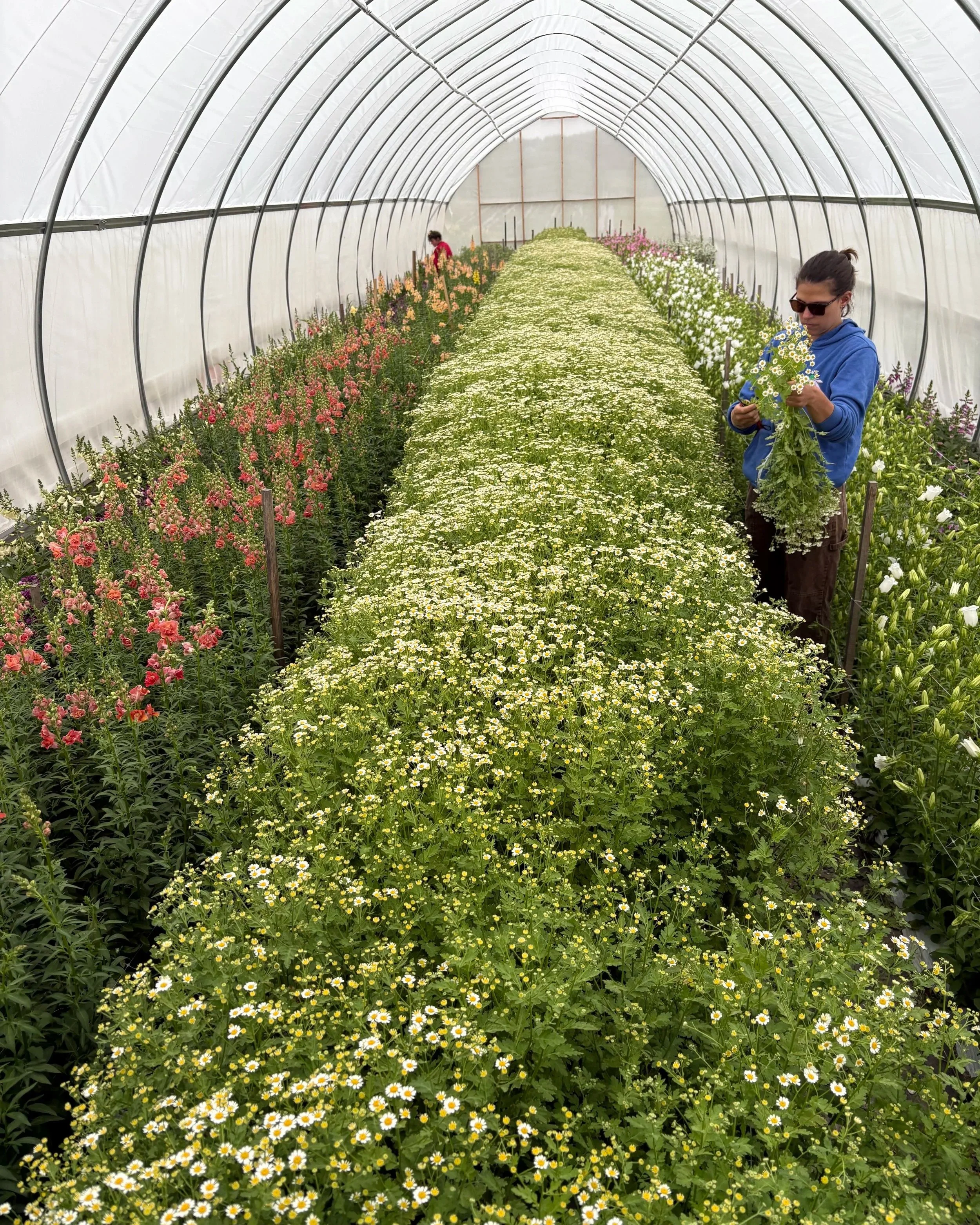
Feverfew
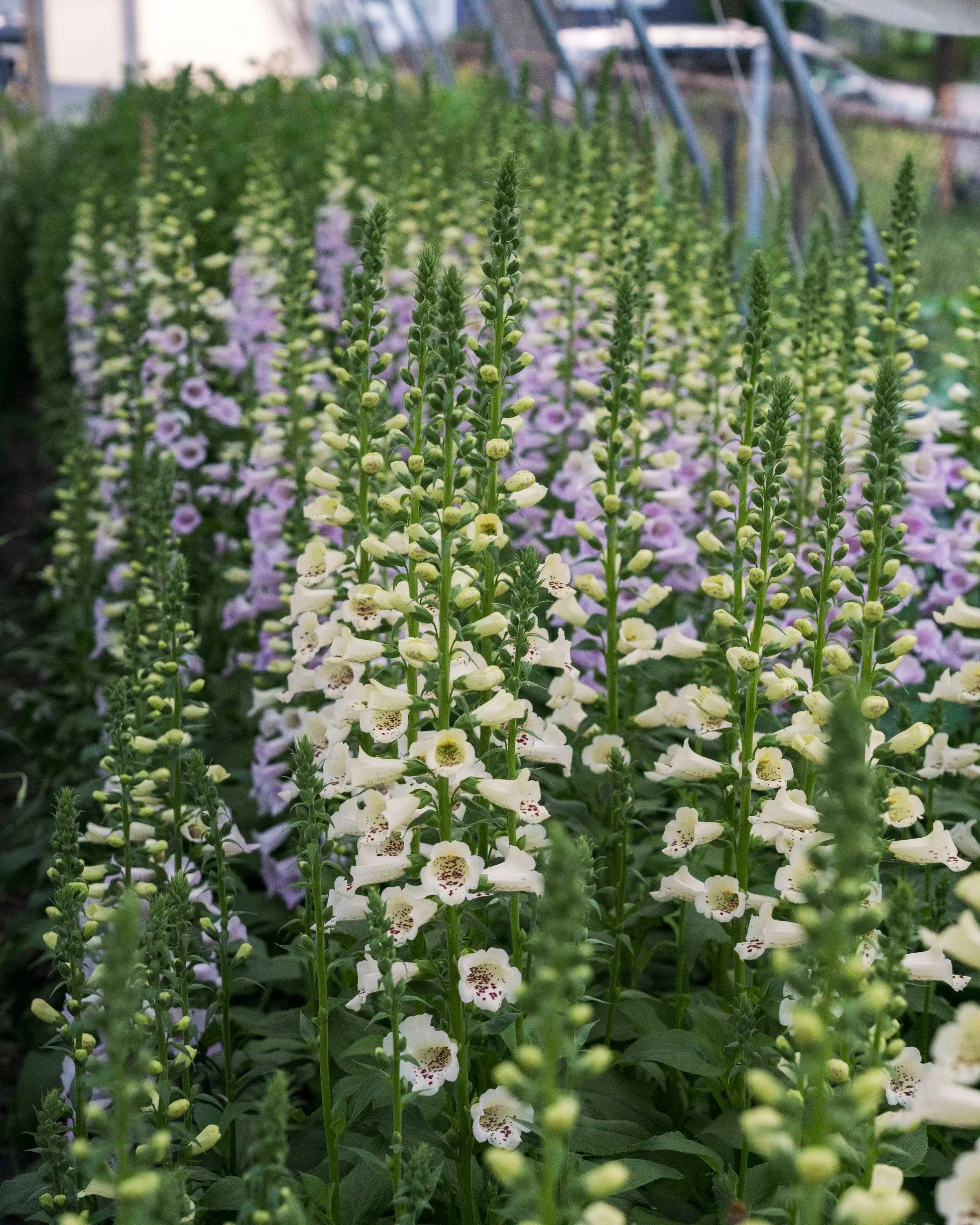
Foxglove
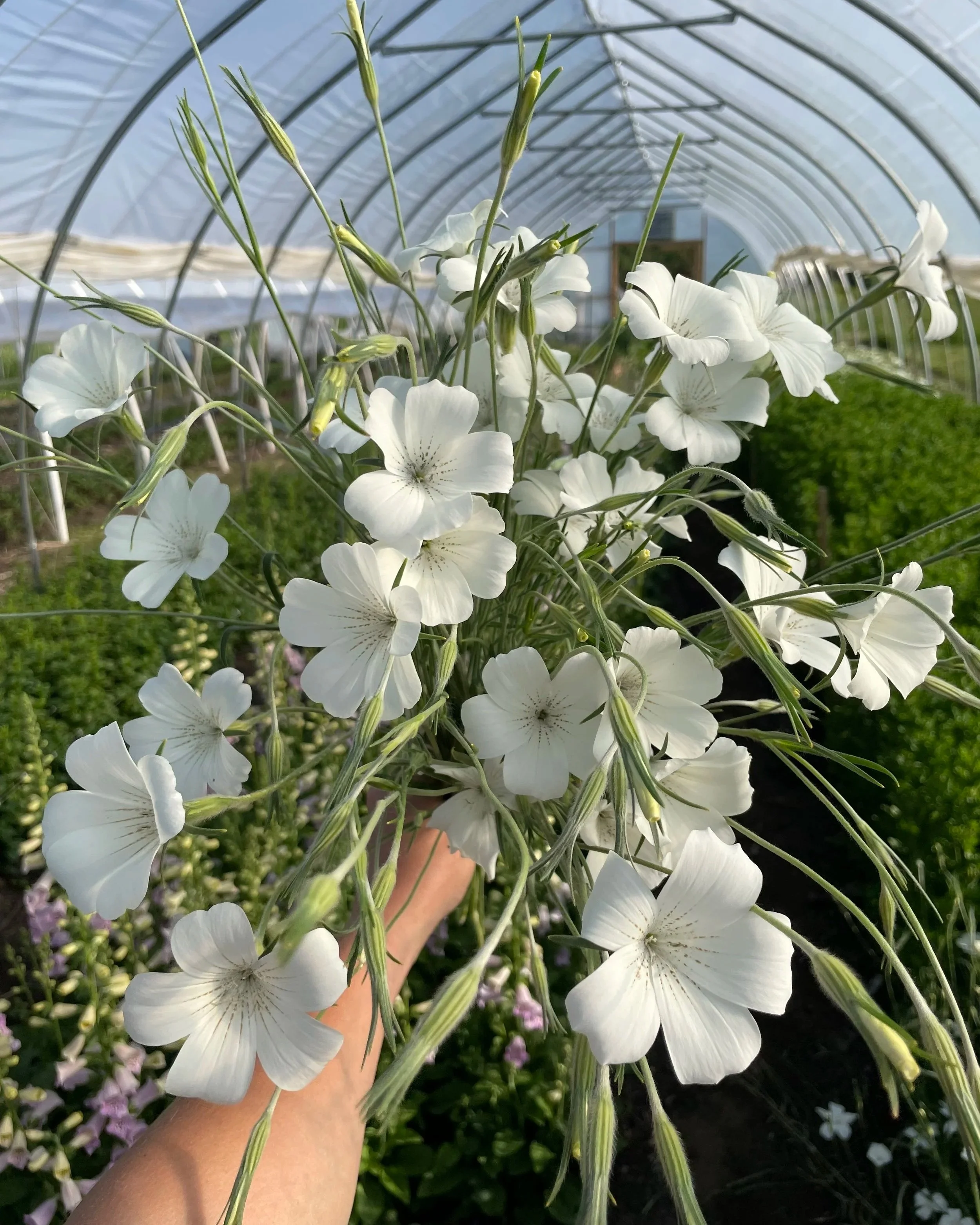
Agrostemma
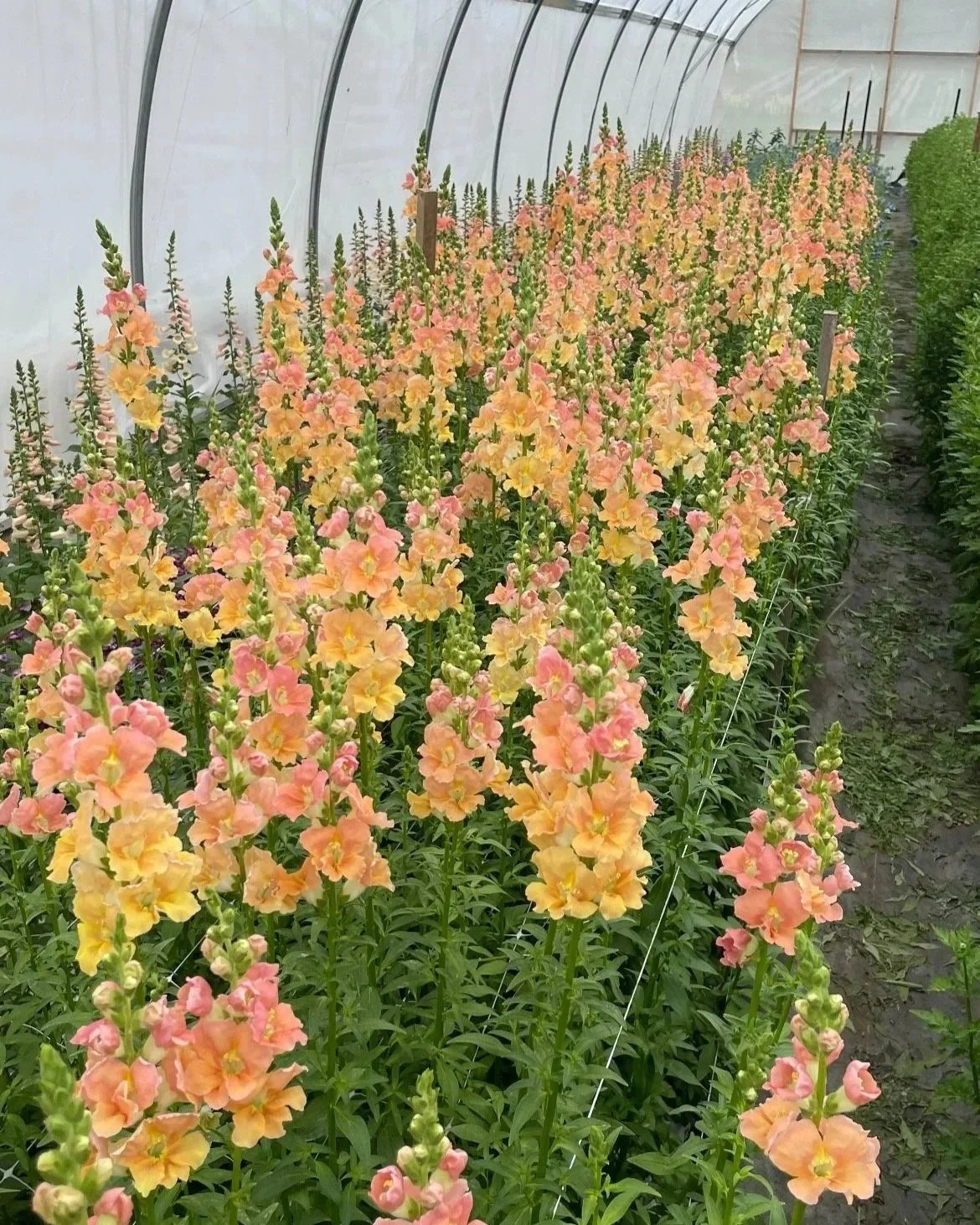
Snapdragon
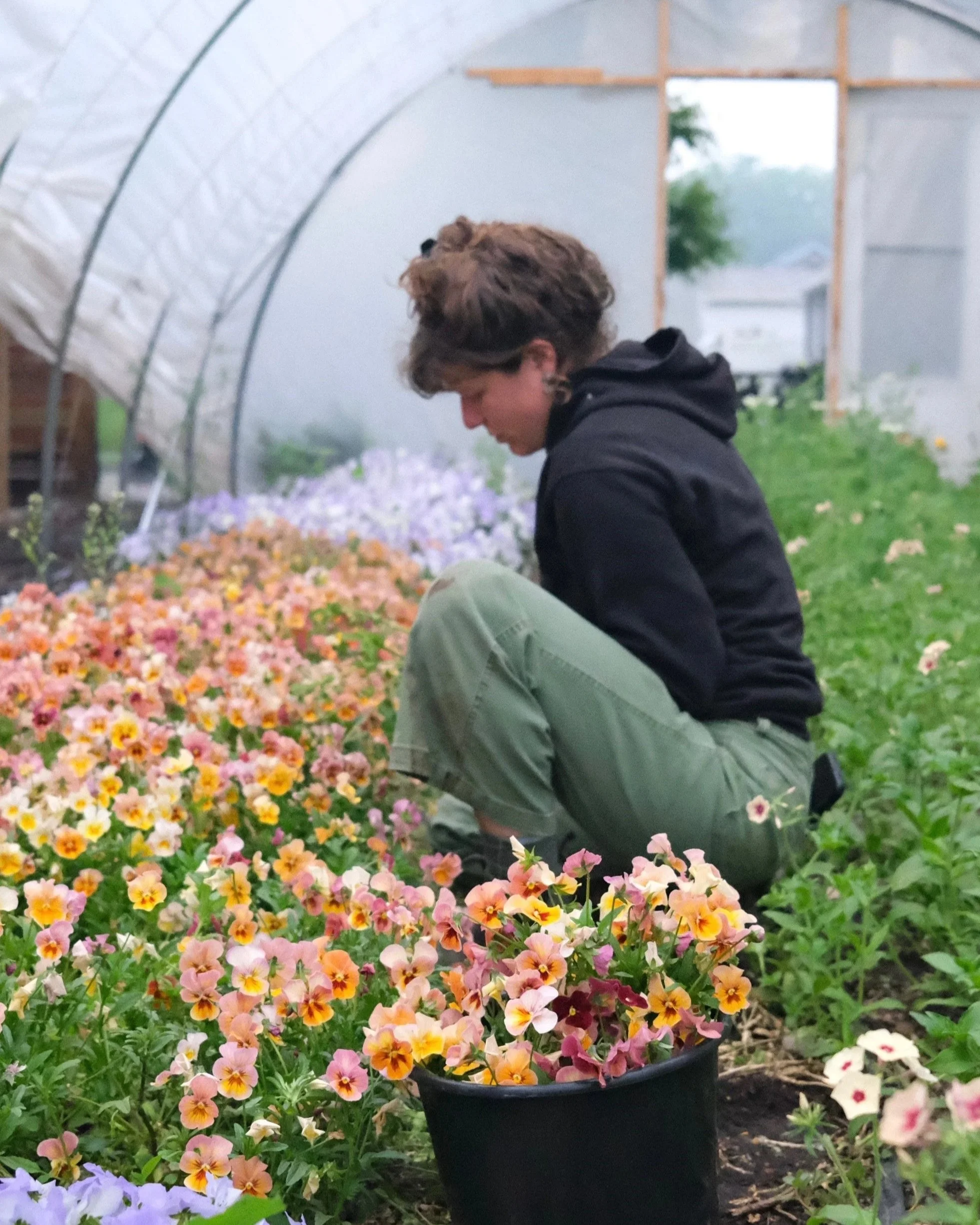
Pansies
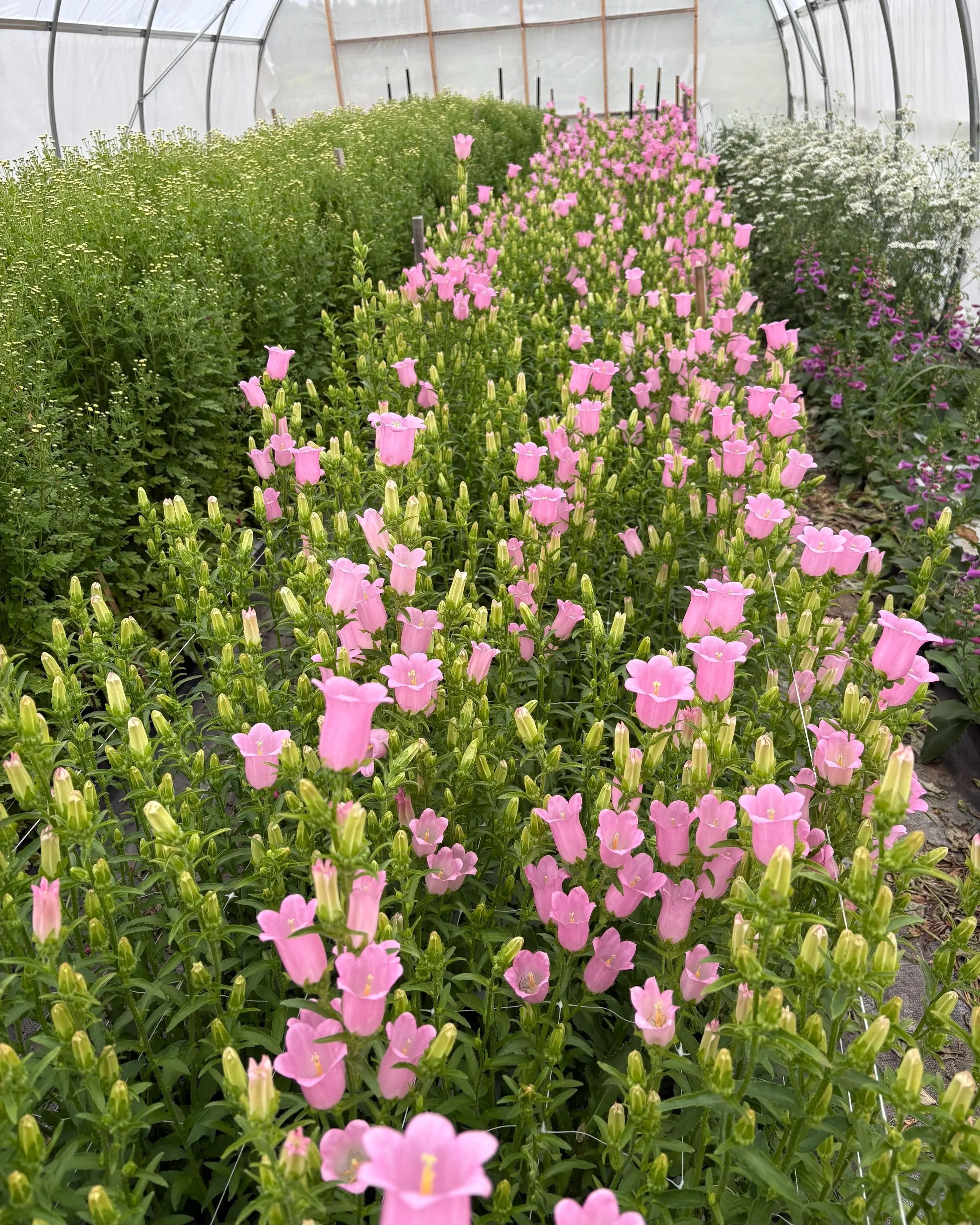
Campanula